Thursday, April 9, 2020

Kodawari Tsukiji in Paris, France

Kodawari Tsukiji


Back to Kodawari Ramen in Paris! In 2016 they opened their first spot over on the Left Bank to much fanfare. Since then they have been awarded the Palme d’Or de la Restauration for 2017, the Enseigne d’or 2018, and a spot in the Paris Michelin Guide. This is huge for a little shop opened by a French ex-pilot who just wanted to make ramen for the love of noodles.

Moving forward, Kodawari Tsukiji, their second branch, opened in the Palais Royale district, just a few minutes from the famous Louvre Museum. Mona Lisa or ramen? Now you can have both.


Tsukiji is modeled after the now-closed Tsukiji fish market from Tokyo. If you ever had the chance to visit the world's most famous fish market, it was insane. Boxes stacked to the ceiling. Delivery carts racing around, their drivers yelling at tourists to get the hell out of the way. Tons and tons of fish from around Japan and the world.

In late 2018, they made a frantic move to Toyosu, an area a few kilometers away. The new facilities are shiny and new, with separate walkways for tourists and a more efficient overall vibe. Though the whole thing is meant to be a step in the right direction (or just a grab for the overvalued land that Tsukiji sat on), I'll miss Tsukiji.

Kodawari Tsukiji takes a bit of that nostalgia and plops it in Paris. Using mostly local fish, they created something you would never expect outside of Japan.


Fresh iwashi (鰯 - イワシ) sardine, tai (鯛), and lobster (オマール海老) all make their way onto the menu. Around half a dozen ramen choices and more appetizers turn this spot into a whole experience.


Creamy tai paitan ramen (鯛の白湯). A little ginger brings the dish together. Tai snapper is cooked for around five hours. Reminiscent of Mengyo in Tokyo.


Japanese flair is everywhere. Plastic food samples and lifelike fish from the market. Even the floor is treated to look wet and shiny, just like the old fish market. I spent some time at the old Tsukiji with Jean-Baptiste, the owner of Kodawari, before it closed. One man's trash is another man's treasure; we cleaned a few shops out of broken scales, old calendars, and discarded crates.


I visited Kodawari Tsukiji three times over three days to try everything. The idea of binging the entire menu isn't something I enjoy doing. But I was determined. I even stayed at the Hôtel Montpensier, next door. My room was literally above the restaurant.


Lobster mazesoba. Mazesoba is junky and fun. A nice way to end a meal.


Homemade noodles of course. I have an old YouTube video that is still relevant. Kodawari grows its own special wheat and has it made into flour as close to the Japanese way as possible with an artisanal flour maker.


Kodawari Tsukiji has a couple layers of basements, perfect for a noodle room and prep kitchen. The third basement was actually a surprise discovery. When they were fixing the place up, someone noticed a draft. Move a couple loose bricks to reveal a secret coal storage room. I asked if they found the treasure of the Parisian catacombs or maybe a skeleton or two, but they only admitted to the coal.


A few pots of soup and a constant line out the door. Ramen is hot in Paris and it makes me very, very happy to see this shop doing everything right.


For lighter soups, the two tai snapper bowls work. Chintan or paitan. My favorite bowl of the bunch, however, was the sardine based SARDINE BOMB !! 鰯 BOMB !!


Sardines from Bretagne. Pork from the Basque region. A flavor bomb of umami. This is the kind of bowl that generally fails overseas; westerner's shy away from the fishy, bitter flavors of sardine ramen. I'll take it any day.


Appetizers are, well, appetizers. I'm generally not a fan, but here at Kodawari they are on the simple side and won't ruin your palate.


That said, I usually order the ramen first, then hang out with some drinks and appetizers after slurping my bowl.


Taiyaki from nearby Japanese confectionary shop La pâtisserie TOMO.


Looking forward to the future of Kodawari. Overseas ramen shops all have different passion behind them, and Kodawari's passion is to bring amazing Japanese ramen to the critical, but fun-loving mouths of the Parisian casual gourmet scene.


Official site here.


Monday, April 6, 2020

Hrimnir Ramen in Oslo, Norway

Hrimnir Ramen


I'd heard years ago of a true Nordic ramen pop-up in Copenhagen. A place using locally foraged vegetables, Scandinavian-style fermentation, run by an American-Norwegian microbiologist. This pop-up then went on to open as a shop in Oslo, Norway. Hrimnir Ramen. The name is a Nordic word meaning charred over soot. A fairly Norweigan death metal name for a fairly rad ramen spot.


This is Will, the sous chef and master fermenter. David Quist, the chef-owner of Hrimnir was sadly out of town when Philipp Inreiter and I visited. You remember Philipp? He's the guy behind Slurp Ramen in Copenhagen. We had the bright idea of flying to Oslo in the morning, crushing ramen, local food, and craft cocktails for the day, then heading back. The whole trip was anything but smooth, turning into a bit of a comedic tragedy by the end. Nothing opens before noon, and our timing was positively jacked because of this cultural fact. The whole thing is worthy of a YouTube video, of which I will be making sometime soon. Stay tuned.


I suspect the menu is constantly changing here. We tried the tsukemen bowl and the vegetarian bowl. Tsukemen is an organic hen paitan soup with a bit of local smoked fish for added umami. Almost everything that went into this bowl is locally sourced. Flour from Agrossist. Pork from Annis Pølsemakeri Mathallen. Swiss chard from Losæter.

The Vegetarian deal was made with a smoked cerelac soup and unique local vegetables like sunchokes. One of the most fragrant vegetarian bowls I've had, mainly from the aromatic koji oil. Poking around social media, this one is quite popular.


Appetizers are fun, playful, and random. What I mean is that I expect this part of the menu to change with the seasons. As someone who obviously releases their content many months after the actual visit, I can only suggest ordering a bunch as a group.


Kimchi made in house. Smoky and intense.


Personally, I'm a weirdo who wants to eat ramen first, doing snacks and booze after, but that's just me. The potato salad is a bomb of flavors.


Kakigori cocktails? They sourced a nice Japanese shaved ice machine, and though this is miles away from kakigori, it was shaved well and fun.


In the back kitchen, where the fermentation takes place, Hrimnir is doing all kinds of magic. Koji mold is grown on barley, ready to be used in more complicated preparations or just sliced up and grilled as an appetizer. 


Various fruits and vegetables sit in jars, awaiting magical chemical reactions to bring forth flavors unknown. Gooseberries in a lactic solution, beer vinegar, nasturtium vinegar.

And then there is the "soy" sauce. Soy sauce is traditionally made by soaking roasted soybeans with wheat and salt in water. Spent coffee grounds are a kind of roasted bean, right? If you don't believe me, you'll just need to try for yourself. Side note, the coffee grounds are from nearby Tim Wendelboe.


If you watch (ed) my YouTube video about Hrimnir, you'll know that the final bowl was done takeaway. Personally, I'm not a fan of the concept of takeaway or delivery ramen. I'm also not a fan of debating this with anyone. I do, however, make an exception with mazesoba, any kind of soupless ramen. Fortunately, this soupless tantanmen held up quite nicely, at least until midnight or so. The icing on the cake of an 18-hour ramen day.


Official site here.


Friday, April 3, 2020

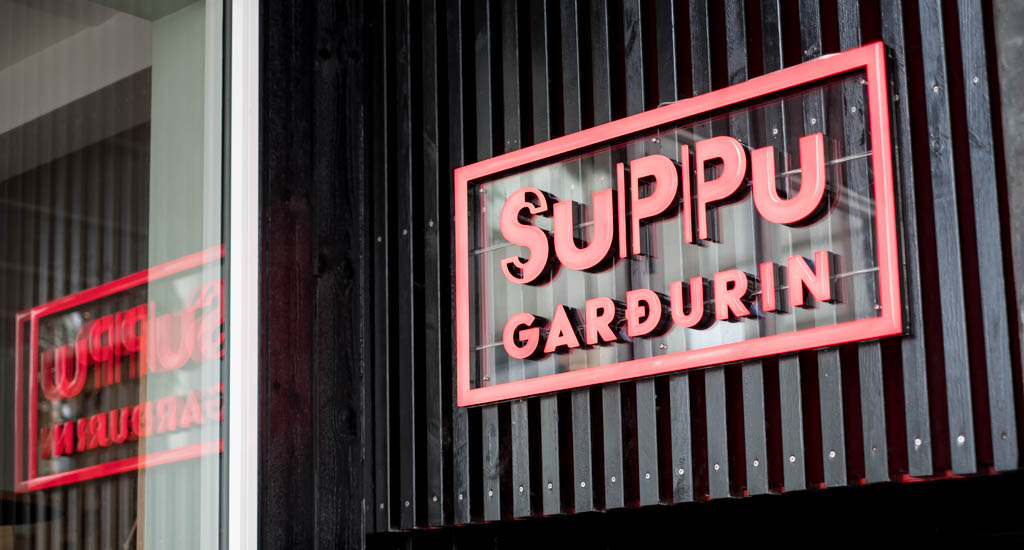
Suppugarðurin in Faroe Islands

Suppugarðurin - フェロー諸島のラーメン


Wait, where are you? The Faroe Islands?


Yep! Actually, we just stumbled on this shop randomly. It was the American behind Ramen Adventures, the Russian behind Karma Ramen, and the Japanese behind Antcicada Ramen. You know we had to try!


A broad menu with the standards of the ramen world.


Super random, and probably Faroe's only ramen shop. The food scene in Faroe is quite unique. You have one of the world's top restaurants, Koks, a few spots in the capital city of Torshavn, and then a whole lot of nothing in the rest of the country.


So, yeah, we were surprised to see a ramen shop. Suppugarðurin is downstairs from a Danish open-face sandwich place, so you have two hip, trendy foods in one essentially.


Shota-kun was out here doing a stage at Koks. He's spent all of his short adult life in gourmet kitchens, having worked at L'effervesence in Tokyo and some stints out in Copenhagen and Faroe. By the time you read this (assuming Covid-19 hasn't said otherwise), he will be working at his new restaurant in Tokyo, Antcicada. They serve a gourmet course in the evening and ramen for lunch. Oh, and everything on the menu is insect-focused. Of course, I'll be bringing you a bit more info about that soon.


Here with Igor in my new Faroe-made sweater.


What a magical land.


Honestly spectacular. I'd love to come back, with a motorcycle, and spend a few more days exploring this tree-less mound of green.


I'll be baaaaack.


The ramen was fine. Some issues with the balance, as the tare was quite weak in the shio ramen. Fun shop with a neat atmosphere. The walls are handpainted with dragons and schoolgirls and some slightly incorrect Japanese phrases.

They have some excellent beers from Mikkeller, though it seems like everyone in northern Europe has some excellent beers from Mikkeller on their menus.

And I wasn't kidding about the food scene being sparse here. Outside of Torshavn, there are the occasional pizza / kebab / gasoline stands, and the occasional small supermarket. We stayed at an Airbnb in an old Boy Scout camp. It was a cabin on the water with no amenities and a great price. We drank local aquavit with tins of preserved fish. It was epic.


Official site here.